
Starting a side hustle sounds really romantic until you’re six tabs deep into “best website builder” articles written by people who have clearly never tried to set up an online shop at 11pm while stress-eating garlic bread.
Everyone online says things like “just build a website!” as if you magically emerge from the womb understanding domains, SEO, plugins, payment gateways, mobile optimisation, and why every button on your homepage has suddenly moved three pixels to the left for absolutely no reason.
So here’s the actual truth.
Most small business owners do not need the fanciest website builder on earth.
You need:
- something affordable
- something easy
- something that doesn’t look like it was built in 2007
- and something you can understand without watching a 4-hour YouTube tutorial by a man named Dave speaking into a gaming headset microphone.
I’ve tested these properly before writing this because frankly, I’m tired of blogs recommending platforms they’ve clearly never touched.
So here’s the real breakdown.
The good.
The annoying.
The hidden catches.
And who each one is actually good for.
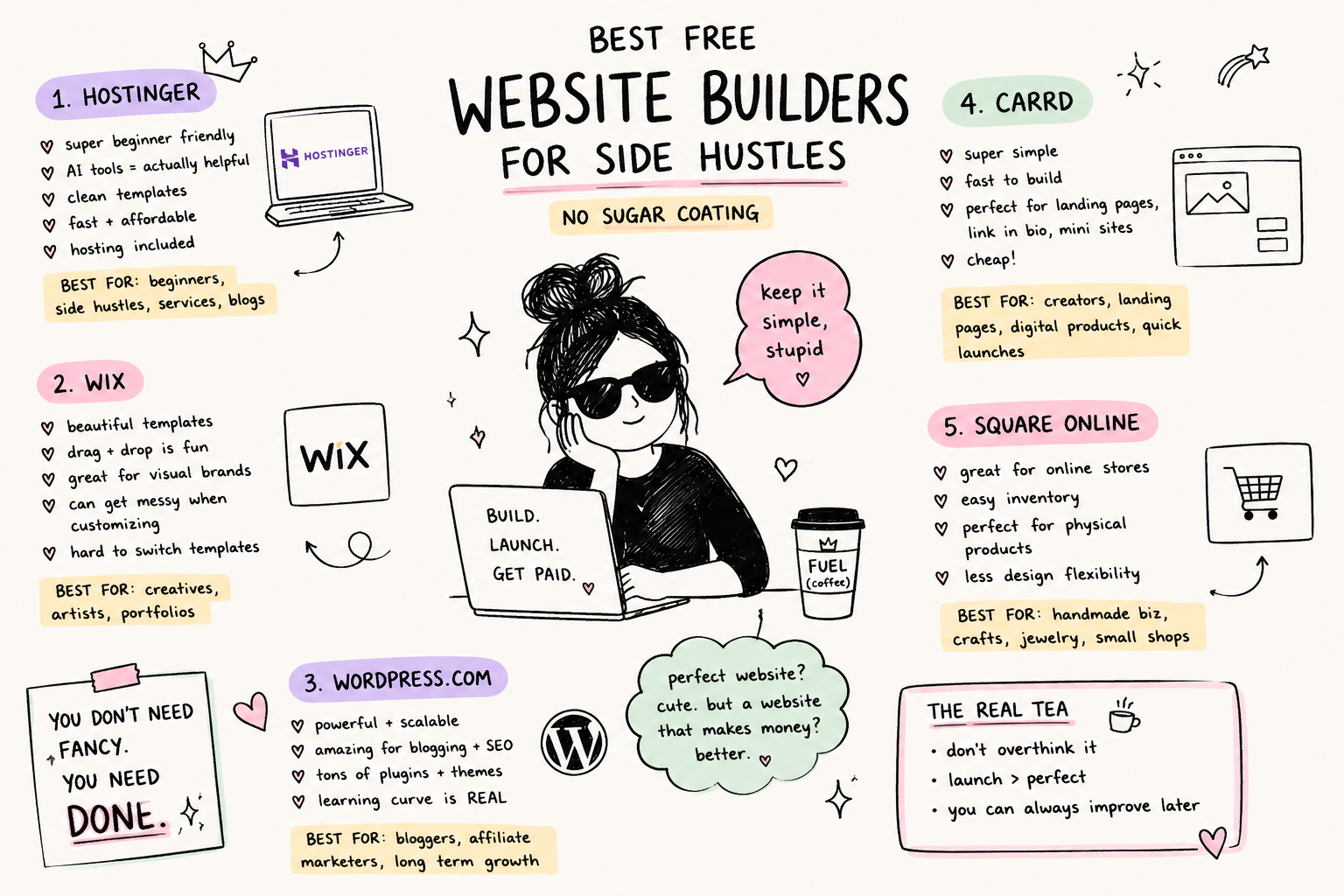
1. Hostinger — The “I Just Need This To Work” Option
If you are a beginner, this is honestly one of the easiest platforms to get moving with.
And I mean actually moving. Not “sign up then spend six hours crying over settings.”


What I liked:
- ridiculously beginner-friendly
- AI tools that genuinely help instead of generating nightmare websites
- clean templates
- fast setup
- cheap compared to most competitors
- hosting included
- doesn’t feel overly technical
The biggest thing?
It removes a lot of the fear around starting.
A lot of side hustlers delay launching because they think websites are this huge impossible mountain. Hostinger feels more like:
“Okay cool, I can actually do this.”
The downside:
- less flexible than WordPress long-term
- if you become super advanced later, you may eventually outgrow it
- some AI-generated copy sounds like a LinkedIn robot wrote it after drinking three espressos
Who it’s best for:
- handmade businesses
- affiliate blogs
- service businesses
- creators
- side hustles
- people who are not techy
- people who value peace over custom coding
Honestly? This is one of the few builders where I could see a genuinely overwhelmed beginner actually sticking with it.
2. Wix — Pretty… Until You Try To Move Anything
Wix is visually lovely.
Like… suspiciously lovely.
You start dragging things around and suddenly feel like a graphic designer for about twenty minutes.


The templates are gorgeous.
The drag-and-drop builder is easy.
And for portfolio-style websites, it can look genuinely professional very quickly.
BUT.
The second you start changing layouts too much, things can become chaotic fast.
I had moments where:
- desktop looked great
- mobile looked possessed
- spacing disappeared into another dimension
- text boxes started fighting each other
Also worth knowing:
Once you choose a template, switching later is a pain.
Who it’s best for:
- photographers
- artists
- visual brands
- portfolios
- creators who care heavily about aesthetics
Not my favourite for blogging long-term though.
3. WordPress.com — Powerful But Slightly Like Being Thrown Into The Wilderness
This one needs honesty.
People LOVE recommending WordPress because technically it’s incredibly powerful.
And they’re right.
But beginners are often told to use WordPress by people who forgot what being a beginner feels like.


If you use WordPress:
you are getting flexibility, scalability, plugins, SEO power, and room to grow.
You are ALSO getting:
- plugin confusion
- update notifications every twelve seconds
- settings hidden inside settings hidden inside settings
- occasional moments where your site breaks and you stare at it like a Victorian child seeing electricity for the first time
That said…
For blogging and SEO?
It’s still one of the strongest options available.
Especially if your side hustle is:
- affiliate marketing
- content creation
- long-term blogging
- niche websites
- digital products
Just know there’s a learning curve.
And no, you are not stupid if you initially hate it.
Everyone acts like WordPress is intuitive.
It is not.
People just Stockholm syndrome themselves into understanding it eventually.
4. Carrd — Weirdly Brilliant For Tiny Businesses
Carrd is criminally underrated.
It’s basically:
“What if websites stopped being dramatic?”


It’s simple.
Fast.
Cheap.
And weirdly effective.
You can build:
- landing pages
- link hubs
- mini portfolios
- waitlists
- digital product pages
- simple service sites
Would I use it for a giant ecommerce business?
No.
Would I use it for:
- testing ideas
- building an audience
- launching quickly
- affiliate pages
- creator landing pages
Absolutely.
Honestly one of the best “stop overthinking and just launch” tools available.
5. Square Online — Surprisingly Good For Selling Physical Products
This one surprised me.
Especially for small makers and craft businesses.


If your side hustle involves:
- handmade products
- market stalls
- jewellery
- candles
- art prints
- crochet
- physical products
…it’s actually quite solid.
The inventory setup is easier than some bigger ecommerce platforms.
The downside:
- less customisation
- design flexibility isn’t amazing
- blogs aren’t great
But for simply getting products online?
Way less stressful than some alternatives.
The Thing Nobody Tells You About Website Builders
Your first website probably won’t be perfect.
And that’s normal.
I think a lot of people secretly believe successful business owners launched with some flawless luxury website and perfect branding.
Most of us launched with:
- three pages
- one slightly blurry logo
- mild panic
- and vibes
The website itself is rarely what kills a side hustle.
Usually it’s:
- overthinking
- perfectionism
- endlessly rebuilding instead of launching
- trying to look “professional enough” before earning money
You do not need:
- a £10k custom website
- perfect branding
- advanced coding
- fancy animations
- twenty plugins
- a twelve-page strategy document
You need a website that exists.
That’s the bit people skip.
My Actual Recommendation?
If you are:
- overwhelmed
- anxious
- starting your first side hustle
- not super techy
- trying to launch quickly
Start simple.
Seriously.
A basic website earning money beats a “perfect” unfinished website every single time.
And if I had to recommend beginner-friendly options overall?
My shortlist would honestly be:
Because at the end of the day:
the best website builder is the one that gets your business online instead of trapped inside your Notes app for another six months.