
More Than Perfect Branding in Business
If you spend enough time looking at business advice online, eventually everything starts sounding the same.
The same “CEO morning routines.”
The same beige branding.
The same polished entrepreneur aesthetics.
The same recycled motivational quotes pretending burnout is a personality trait.
And somewhere in the middle of all of that, a lot of small business owners slowly stop sounding like themselves.
They start editing out the weird bits.
The hobbies.
The humour.
The contradictions.
The parts of themselves that feel “too niche” or “not professional enough.”
But honestly? Those are usually the exact things people connect with most.
Because in 2026, personality is one of the few things online that still genuinely stands out.
AI can generate logos.
It can write captions.
It can build websites.
It can create content calendars.
But it cannot replicate lived experience properly.
It cannot recreate your personality, your humour, your perspective, or the strange mix of things that make you you.
And that matters more in business than most people realise.
Why Authentic Personal Branding Matters More Than Ever
A lot of people hear the phrase “personal branding” and immediately cringe.
It sounds fake.
Performative.
Like somebody trying to become a LinkedIn influencer against their own will.
But real personal branding is not about pretending to be somebody else.
It is about allowing your business to reflect your actual personality instead of hiding behind a generic “professional” mask.
Because people no longer follow businesses purely for products.
They follow:
- personalities,
- lifestyles,
- humour,
- aesthetics,
- stories,
- values,
- and emotional connection.
This is especially true for:
- small businesses,
- creators,
- affiliate marketers,
- side hustlers,
- podcasters,
- artists,
- handmade brands,
- and online entrepreneurs.
The internet is oversaturated with polished content.
What people remember now is authenticity.
People Buy From Humans They Relate To
One of the biggest shifts in online business over the last few years is that audiences increasingly care about who they are buying from.
People want:
- relatable creators,
- honest storytelling,
- personality-driven content,
- and businesses that feel human.
Not corporate.
Not sterile.
Not perfectly manufactured.
That is why smaller creators often outperform huge polished brands in engagement. Their content feels emotionally real.
And emotional connection builds trust faster than perfection ever will.
The Biggest Branding Mistake Small Businesses Make
One of the most common mistakes small business owners make is trying too hard to look like a “real entrepreneur.”
They start copying:
- business coaches,
- influencer aesthetics,
- trending templates,
- motivational creators,
- or whatever Instagram currently thinks success should look like.
And slowly, everything starts becoming watered down.
But generic branding is forgettable branding.
The strongest personal brands online are usually highly specific.
People remember:
- the tattooed baker,
- the biker jewellery maker,
- the chaotic ADHD business owner,
- the goth crocheter,
- the fantasy-loving entrepreneur,
- the gym girl who also games,
- or the corporate worker secretly building a side hustle at midnight.
Those combinations feel memorable because they feel real.
Humans are layered.
Your business should be too.
Can You Mix Professionalism and Personality in Business?
Absolutely.
And honestly, more people should.
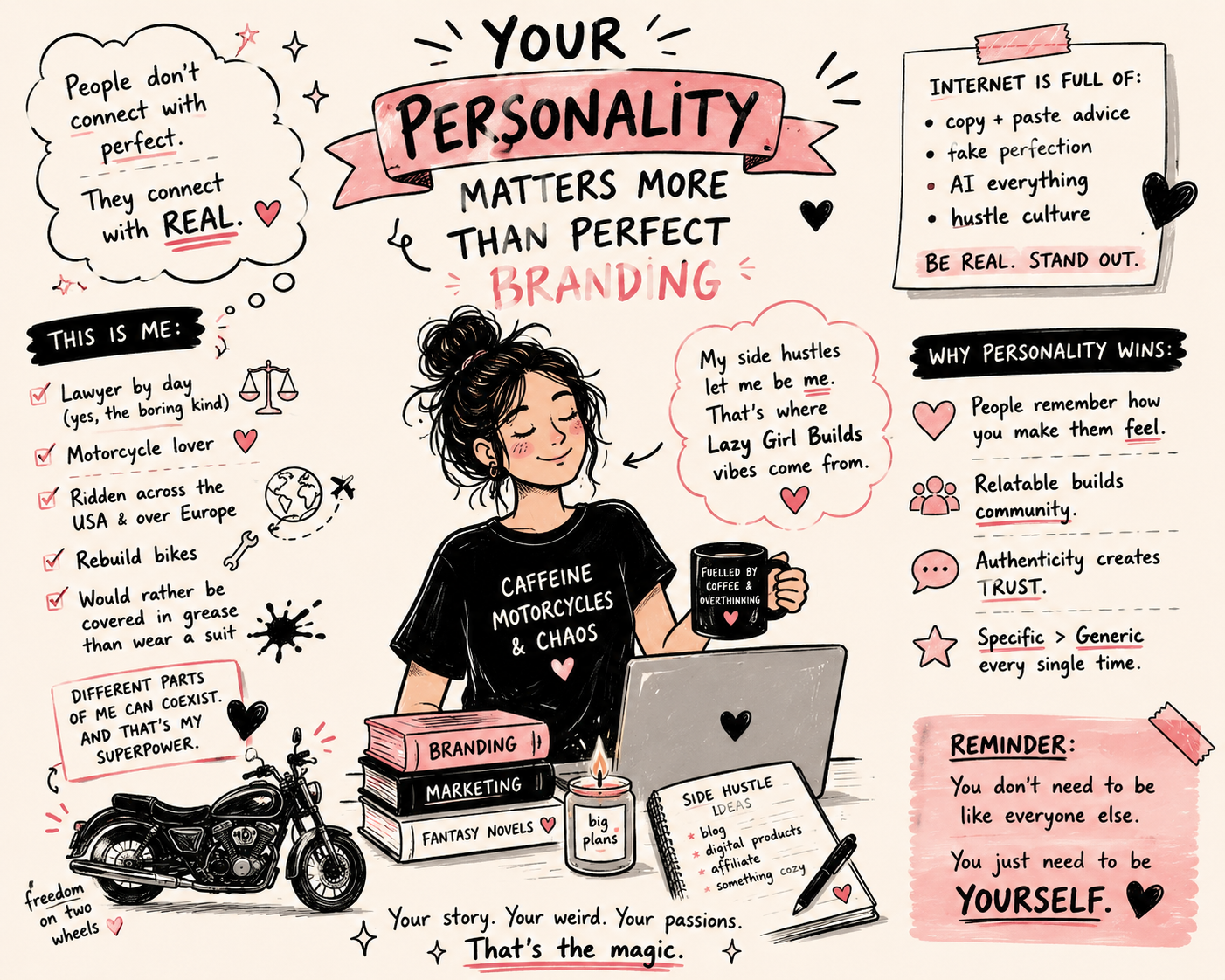
For a long time, I thought I had to keep different parts of myself completely separate online.
By day, I work in law.
A serious environment where people expect professionalism, structure, and a very polished image.
But outside of that?
I love motorcycles.
I have ridden across the USA and throughout Europe.
I grew up around bikes.
I have rebuilt motorcycles.
I would genuinely rather be covered in grease and oil than fit the stereotypical “clean-cut lawyer” image people expect.
For years, I thought those interests somehow made me look less professional.
Like I had to pick one version of myself.
The “serious” version.
Or the creative version.
But side hustles changed that completely.
Because building businesses outside of my day job gave me space to actually sound like myself again.
That became a huge part of the Lazy Girl Builds personality.
Not fake perfection.
Not hustle culture.
Not pretending to have everything figured out.
Just honesty.
About:
- overthinking,
- anxiety,
- burnout,
- creativity,
- identity,
- confidence struggles,
- side hustles,
- branding,
- and trying to build something meaningful while balancing real life.
Ironically, the moment I stopped trying to sound like a generic entrepreneur was the moment my content started feeling stronger.
Because people connect with people.
Not polished masks.
Why Side Hustles Often Become Part of Your Identity
One thing people rarely talk about is how emotional side hustles actually are.
Yes, money matters.
But for many people, building something outside their normal job becomes about far more than income.
Sometimes your side hustle becomes:
- your creativity,
- your escape,
- your confidence,
- your storytelling outlet,
- your identity,
- or the place where you finally stop hiding parts of yourself.
That is why personality-driven brands often feel more alive.
Because there is real emotion behind them.
You can feel when somebody genuinely cares about what they are building.
And audiences naturally gravitate toward creators who feel authentic.
Why Generic Brands Struggle on Social Media
Social media platforms reward emotional engagement.
Not perfection.
Not corporate wording.
Not overly polished marketing.
People engage with content that:
- feels relatable,
- creates emotional reaction,
- starts conversations,
- shows personality,
- shares experiences,
- or feels genuinely human.
That is why:
- behind-the-scenes content,
- funny observations,
- personal stories,
- niche humour,
- honest struggles,
- and personality-led posts
often perform significantly better than perfectly polished business graphics.
People are tired of fake internet personas.
They want creators who feel real.
Especially in small business spaces.
How to Build a Brand Around Your Personality
A lot of people think branding starts with logos and colours.
But honestly, strong branding usually starts with identity first.
Your personality should influence:
- your tone of voice,
- your content style,
- your humour,
- your storytelling,
- your aesthetics,
- your opinions,
- and the type of audience you attract.
1. Stop Hiding Your Interests
Your hobbies and interests are not distractions from your brand.
They often are the brand.
Talk about:
- motorcycles,
- books,
- gaming,
- tattoos,
- fitness,
- crafting,
- fantasy,
- travel,
- music,
- or whatever genuinely matters to you.
Specific personalities create memorable businesses.
2. Share the Reality Behind Building a Business
People connect deeply with honesty.
Talk about:
- struggling with confidence,
- overthinking posts,
- burnout,
- learning as you go,
- balancing work and side hustles,
- or failed ideas that taught you something.
Perfect content is forgettable.
Human content builds community.
3. Let Contradictions Exist
You do not need to fit neatly into one aesthetic or identity.
You can:
- love cosy feminine branding and motorcycles,
- work professionally and be alternative,
- enjoy business strategy and fantasy novels,
- be ambitious and exhausted.
Those contrasts make people remember you.
Why Being Memorable Matters More Than Being Perfect
A huge amount of online branding advice focuses on looking polished.
But memorable brands outperform perfect ones constantly.
Because audiences remember:
- personalities,
- emotions,
- humour,
- stories,
- and unique perspectives.
Not perfectly curated Canva templates.
The truth is, people are far more likely to remember:
“the biker lawyer building cosy side hustles”
than:
“female entrepreneur helping small businesses grow.”
One feels human.
The other sounds like every business bio online.
Final Thoughts
You do not need to become a completely different person to build a successful business.
In fact, trying to sound like everybody else is usually the fastest way to make your content feel lifeless.
The strongest brands are built around personality.
So if you are:
- a biker,
- a gamer,
- a tattooed creative,
- a fantasy nerd,
- a chaotic overthinker,
- a cosy introvert,
- a gym addict,
- a folklore obsessive,
- or somebody balancing wildly different identities…
Use it.
Because the parts of yourself you think are “too different” are usually the exact things people connect with most.
And honestly?
The internet does not need more carbon-copy entrepreneurs.
It needs more real people brave enough to sound like themselves.
What’s the part of yourself you hide most in your business content?
Because chances are, that might actually be the thing your audience would love most about you.
[…] Think of it as your overly organised business bestie who actually understands Etsy SEO. […]